October 09, 2026



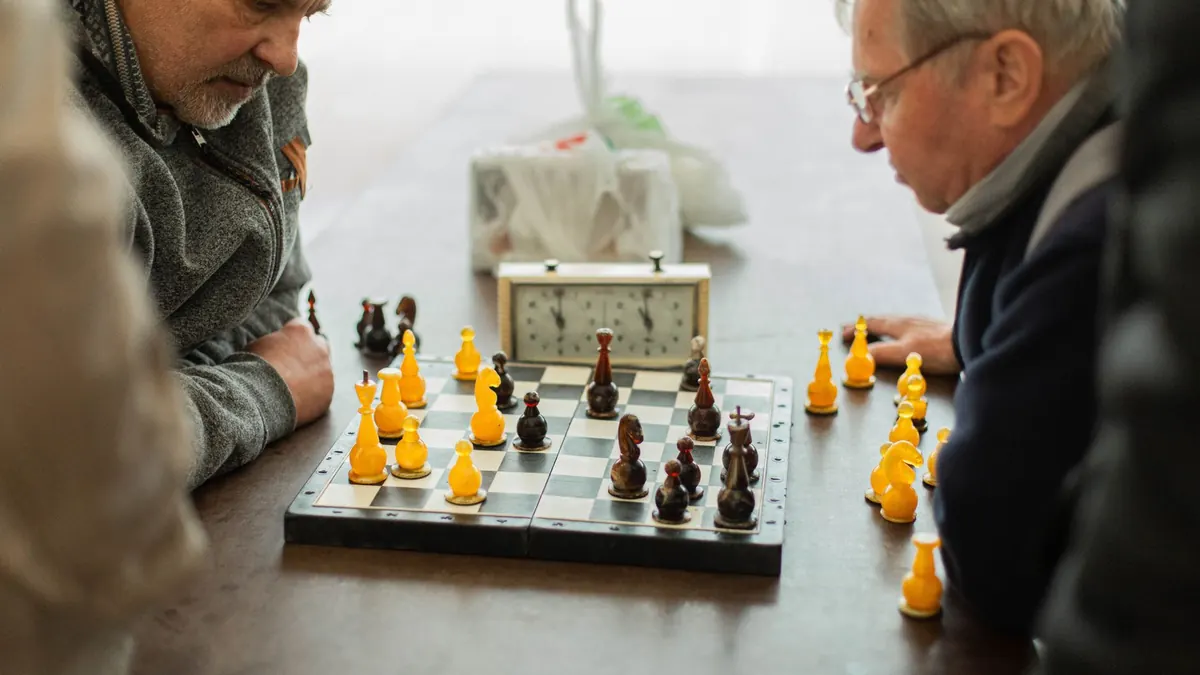
Christmas chess has its own rhythm. The board comes out after lunch, someone drops a queen to a knight fork, and by the evening the same three players are arguing about whether the rook had already moved. The holiday is also the best chance most of us get all year to build a daily habit at the board. What follows is a set of twelve progressive puzzles, one for each day from Christmas Day to Twelfth Night, running from straightforward mates to combinations that reward a second look.
Set the board up somewhere you walk past. Keep a pencil beside it, and leave the engine switched off until you have written an answer down.
The set is built as a ladder. Each day introduces one tactical idea and gives you a position where that idea is the fastest route to a result. Days one to four should take less than a minute once you spot the point. Days nine to twelve should take considerably longer than you expect, even if you know the motif by name.
Two rules keep the set honest. First, write your solution before you check it — a puzzle you "sort of saw" is a puzzle you will fail again in a real game. Second, give a position ten minutes and no more. If nothing appears, look at the solution, then reset the board two days later and try it cold.
Day 1 — mate in one. Start where every combination ends: with the king. Count its escape squares, then find the single move that covers all of them. Most of these will be back-rank mates, where the king is walled in by its own pawns on f7, g7 and h7.
Day 2 — knight forks. A knight on c7 forks a king on e8 and a rook on a8, which is why the square is worth memorising. Scan for a king and a loose piece sitting a knight's move apart, and check whether anything defends the fork square.
Day 3 — pins and skewers. An absolute pin, with the king behind the piece, can be attacked at will — often by a humble pawn. Relative pins need a second attacker before they bite. Skewers are pins in reverse: the valuable piece stands in front.
Day 4 — queen double attacks. The queen is the finest forking piece on the board. Look for one square that hits two undefended pieces at once, and prefer the version that arrives with check. Loose pieces, as the old saying goes, drop off.
Day 5 — discovered attacks. The front piece moves with one threat while the piece behind it creates another. Set up a bishop hiding behind a knight and you have a battery. Double check, where both pieces give check at once, is the most brutal form of all.
Day 6 — removing the defender. Ask who guards the square you want, then take them, drag them away, or offer them something better to do. Sacrificing a rook to eliminate a lone defender is often the cheapest move on the board.
Day 7 — deflection and overload. A defender with two jobs will eventually fail at one of them. Find the piece doing double duty, attack one of its duties, and the other collapses.
Day 8 — back-rank combinations. Clear the pawn shield, lure away the guard, or drop a piece onto the eighth rank to add a second attacker. Check every position where the enemy king has no flight square: a single quiet move can be worth more than a check.
Day 9 — attacking the castled king. The Greek gift sacrifice, Bxh7+, works when the bishop, a knight ready for g5 and a queen heading for h5 arrive in the right order. Count the defenders near the king before you commit; two spare defenders usually means the attack fizzles.
Day 10 — mating nets. Learn the smothered mate as a sequence rather than a position: Nf7+ drives the king to g8, Nh6+ sends it back to h8, then Qg8+ forces the rook to capture and Nf7 is mate with the king buried behind its own pieces. Anastasia's mate, with a knight on e7 and a rook swinging to the h-file, belongs in the same file.
Day 11 — the zwischenzug. Before you recapture, ask whether you have a check, a capture or a threat in between. The counter-check catches more players than any other tactic, because it arrives when they have already stopped calculating.
Day 12 — endgame tactics. Promotion races are tactics in slow motion. Push with check whenever you can, remember that a knight promotion sometimes gives the only winning check, and know the drawn corner: a rook's pawn with a bishop of the wrong colour cannot be converted. Look, too, for the stalemate escape that saves half a point.
Use the same routine on all twelve. It takes about a minute and it transfers directly to your own games.
Keep a small notebook with the motifs you miss. Most players discover they have one weakness, not twelve: a habit of missing knight forks, say, or of recapturing too quickly. Two minutes of review each evening is worth more than an hour of random puzzles.
If you play over the board with family, use a slower time limit than usual and say your candidate moves out loud before you play them. Explaining a combination to someone else exposes the gap in it faster than any engine will. Then, from 6 January, hold on to the ten minutes. One puzzle a day, solved properly, will do more for your play this winter than any single long session.
Photo: Theia Sight / Pexels
Chess strategy and tactics for your desk.
Copyright © 2026 Rook Desk. All rights reserved. Rook Desk.